Professional judgment
How well participants evaluate sources, claims, visual evidence, and competing narratives.
Our approach
Durable understanding grows when rigorous preparation is joined by direct experience, equal professional relationships, honest reflection, and continued engagement.
The premise
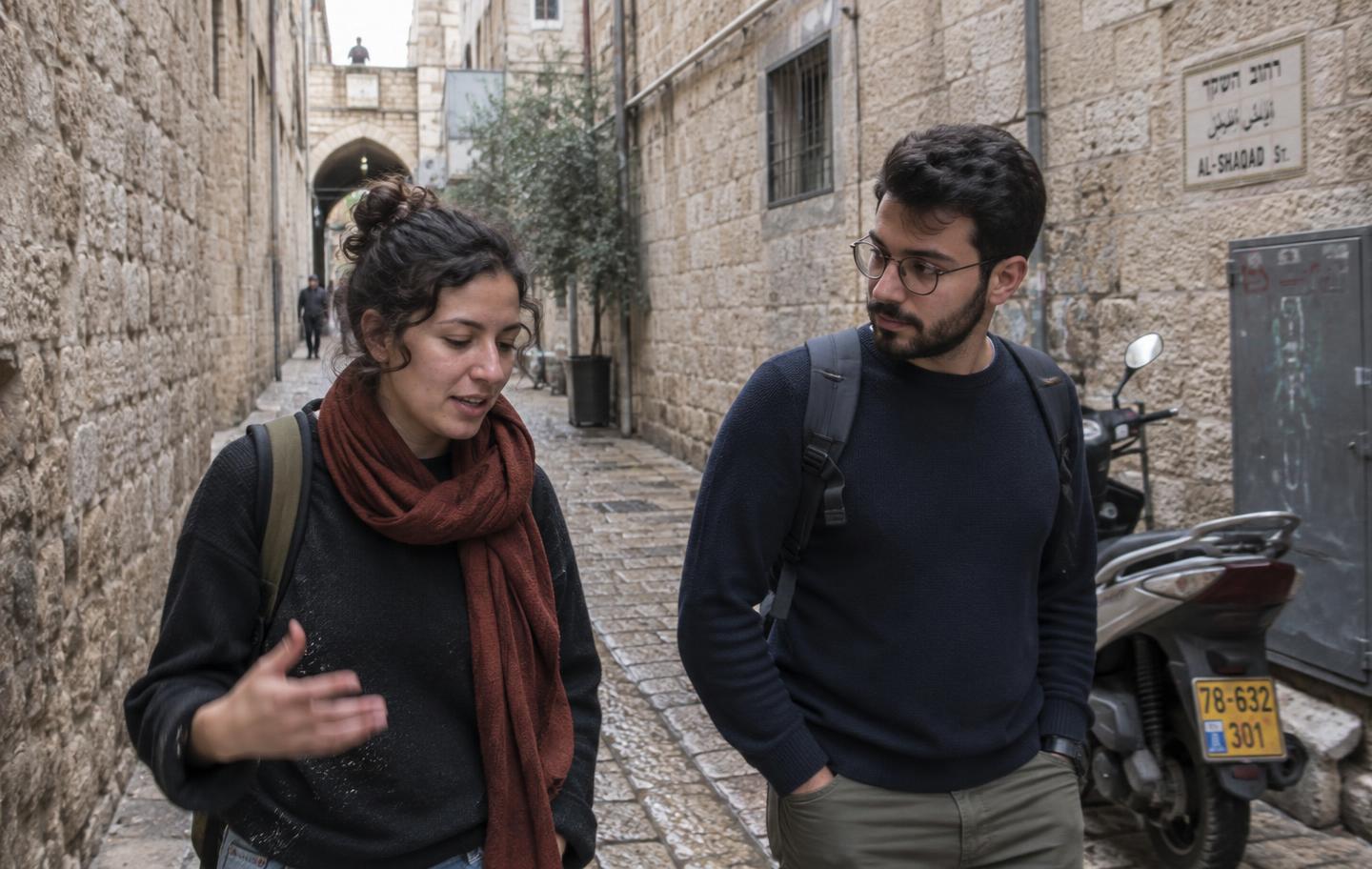
The Amity Way is neither a sightseeing tour nor a program built to deliver a predetermined political conclusion. It is a professional encounter grounded in peer exchange, inquiry, and human contact.
Participants meet media and journalism professionals, educators, healthcare professionals, counterparts from across industry and the sciences, public institutions, faith leaders and theologians, diverse communities, regional experts, and people whose lives are directly shaped by the questions being studied. Critical voices and difficult subjects belong in the room.
We measure whether people become more informed, rigorous, context-sensitive, and responsible.
The model
Participants begin with shared standards, background sessions, source evaluation, and the questions shaping their own work.
A field program brings each cohort into working institutions, diverse communities, and direct conversation with professional peers.
Structured reflection helps participants test assumptions, weigh competing perspectives, and form conclusions in their own words.
The Fellowship extends the encounter through mentoring, expert sessions, peer exchange, and participant-led initiatives.

The land
Evidence
Evaluation begins before preparation and continues immediately after the program, at three months, and again at six months.
How well participants evaluate sources, claims, visual evidence, and competing narratives.
Growth in understanding of Israeli society, regional realities, and the institutions participants encounter.
The ability to recognize multiple perspectives and engage responsibly with disagreement.
Continued peer contact, collaboration, fellowship participation, and initiatives led by participants.
Explore